

If there’s a dish that has made the entire world fall in love with Thai cuisine, it is Pad Thai. Smoky, tangy, sweet and savory with a hint of heat plus everything stirred into one single wok over a screaming high flame in under thirty minutes. This is street food perfection. And I will tell you, it is one of the most satisfying things you’ll cook at home.
The delicious Pad Thai (literally “Thai style stir-fried noodles”) actually has an interesting history which intersects with a fascinating period of time in Thai history. During the 1930s and 40s, Thai government actively promoted the dish as part of a national identity campaign, encouraging street vendors across the country to sell it as Thailand’s signature noodle dish. It worked. Pad Thai went from a government initiative to the most beloved street food in all of Thailand, and eventually, the world.
The sauce is what makes Pad Thai so utterly craveable. Tamarind paste, fish sauce and palm sugar are all added with care to create the dish’s distinctive sweet-sour-savory complexity. No single flavor dominates. Everything is in harmony. Add rice noodles, egg, meat, bean sprouts and a shower of roasted peanuts, and you have something that tastes like it came straight off a Bangkok street cart.
The key to a wonderful Pad Thai at home is heat and speed. Cook it fast, cook it hot, and do not overcrowd the wok. This is not a dish to rush slowly on a low flame. It is a dish that demands confidence and a very hot pan. Follow this recipe and you will have restaurant-quality Pad Thai on your table in 30 minutes flat.
What is Pad Thai?
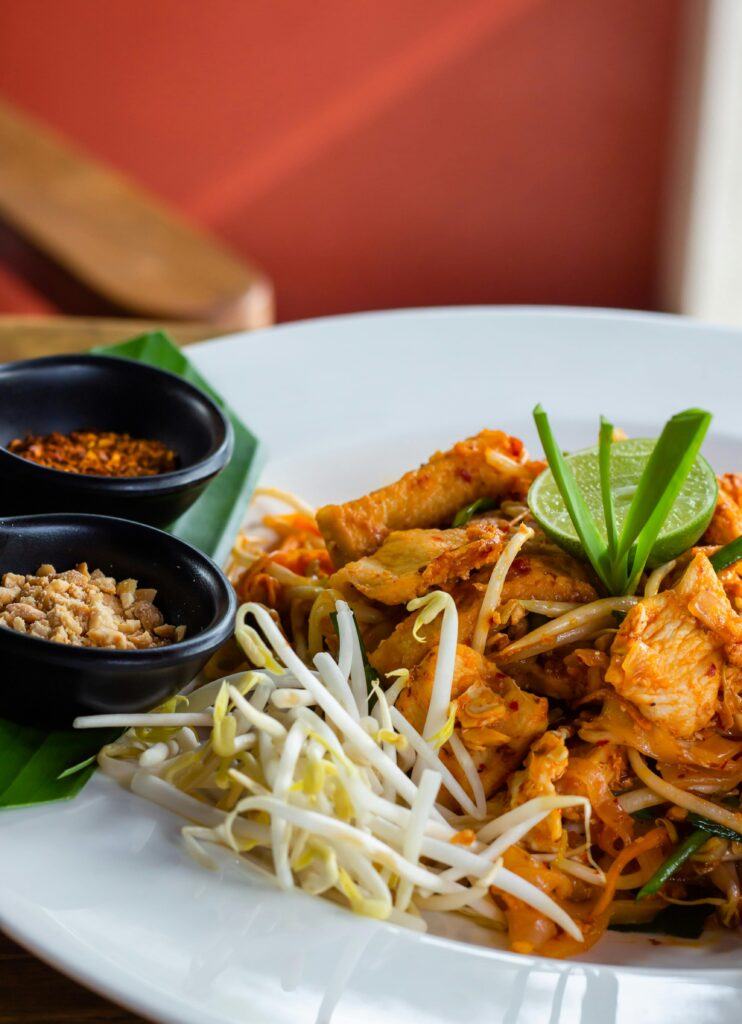
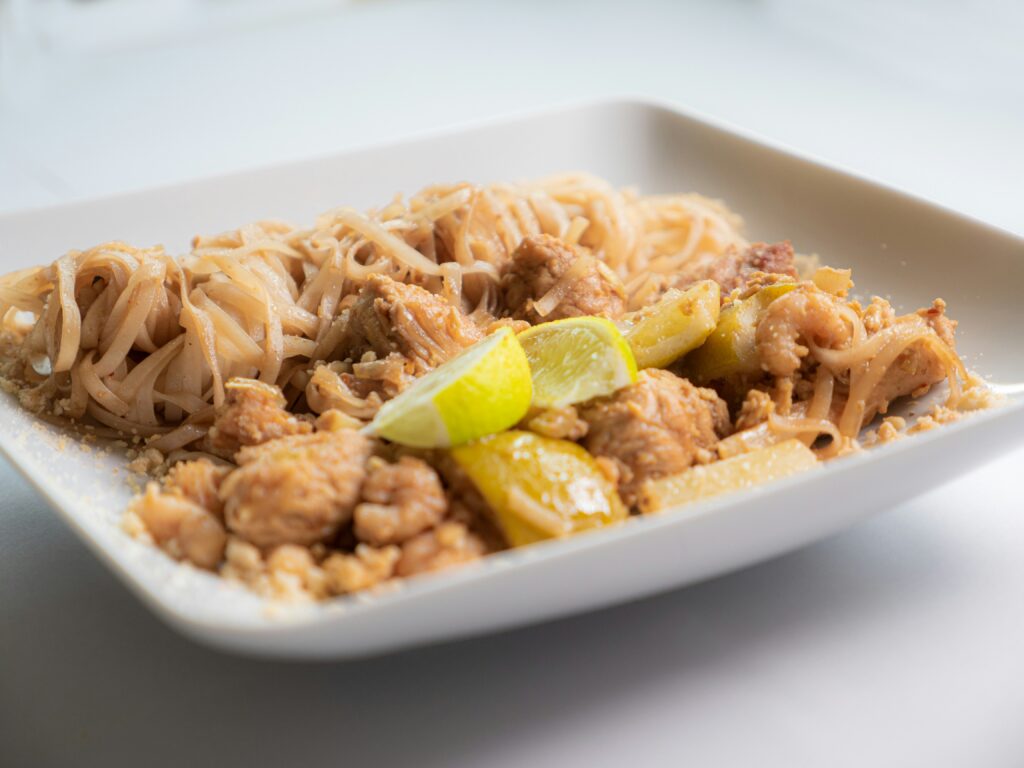
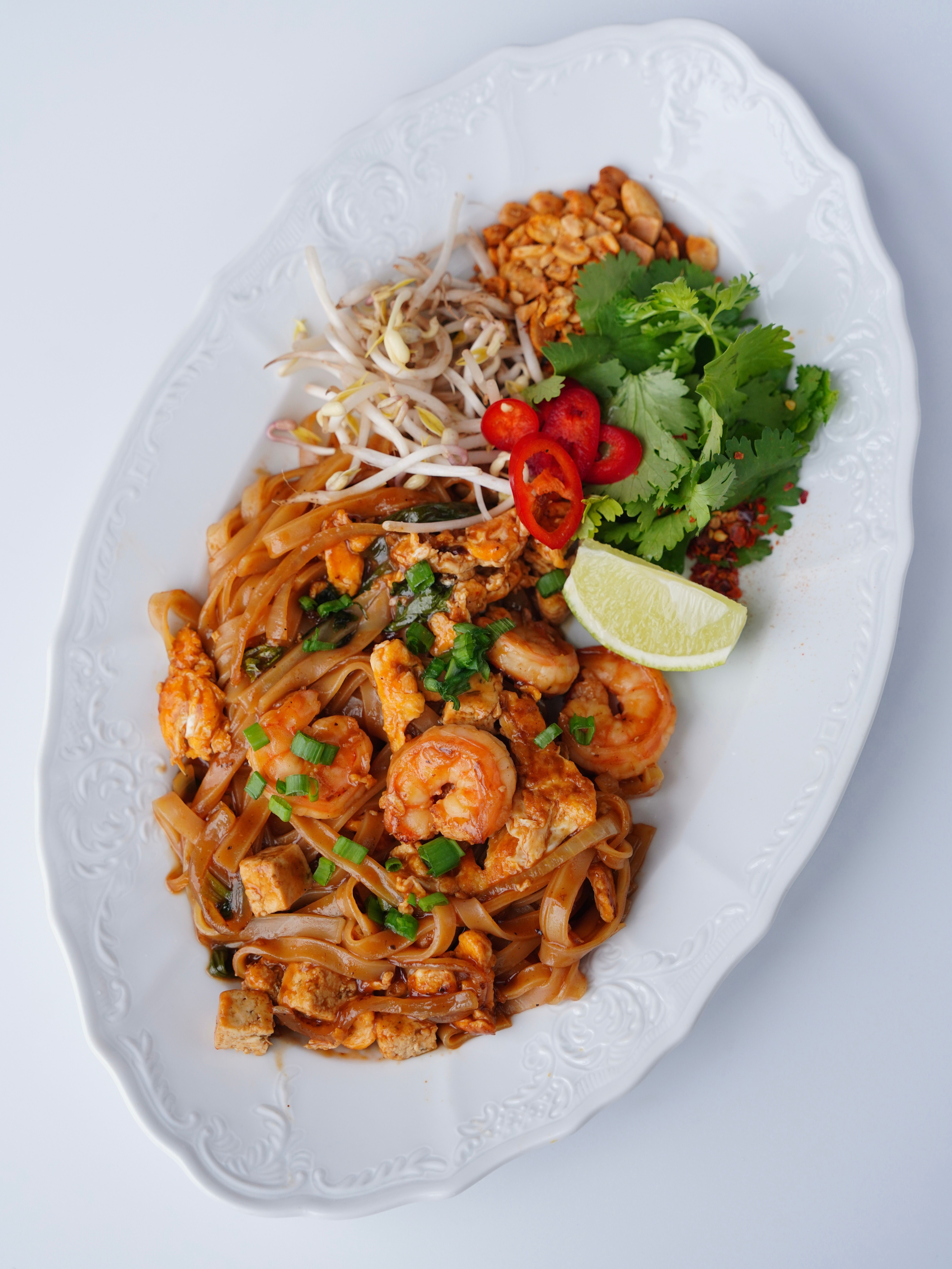
Pad Thai is a Thai stir-fried rice noodle dish with eggs, a protein (most often shrimp or chicken), bean sprouts and signature tamarind-based sauce, and topped off with roasted peanuts, lime and fresh coriander. It is Thailand’s most internationally recognized dish and one of the most searched Asian dishes of recipes worldwide!
The dish belongs to the tradition of Thai street food, fast, bold, cooked to order over intense heat in a carbon steel wok. Every street vendor in Bangkok has their own version, their own wok seasoning built up over decades, their own ratio of tamarind to fish sauce. This recipe brings that spirit home without compromising on any of the flavors that make Pad Thai so extraordinary.



Ingredients
Serves 4 people
For the Pad Thai Sauce
- Tamarind paste – 3 tablespoons
- Fish sauce – 3 tablespoons
- Palm sugar or brown sugar – 2 tablespoons
- Oyster sauce – 1 tablespoon
- Water – 2 tablespoons
For the Noodles and Stir Fry
- Flat rice noodles (5mm width) – 300g – soaked in cold water for 30 minutes
- Chicken breast or thigh – 300g – thinly sliced (or prawns, or firm tofu for vegetarian)
- Eggs – 3 large
- Bean sprouts – 150g – fresh
- Spring onions – 4 – cut into 3cm pieces
- Garlic – 4 cloves – finely minced
- Shallots – 2 – finely sliced
- Dried shrimp – 2 tablespoons (optional but adds authentic depth)
- Vegetable oil – 3 tablespoons
For Serving
- Roasted peanuts – 4 tablespoons – roughly crushed
- Fresh lime – 2 – cut into wedges
- Fresh coriander – a generous handful
- Dried chili flakes – to taste
- Extra fish sauce and sugar on the side — the authentic Thai way
Step by Step Instructions
Step 1: Make the Pad Thai Sauce
Combine tamarind paste, fish sauce, palm sugar, oyster sauce and water in a small bowl. Stir until the sugar dissolves completely. Taste it, it should be a strong balance of tangy, sweet and salty all at once. This is your flavor foundation. Adjust to your preference now, before it hits the wok.
Step 2: Prepare the Noodles
Soak the flat rice noodles in cold water for 30 minutes until they loosened up and firm but bendy, not soft, or brittle. Do not use boiling water, the noodles will continue to cook in the wok, and they need enough structure to stand up to the high heat. Drain and set aside.
Step 3: Get Everything Ready Before You Start
This is the biggest prep step in making Pad Thai. The second the wok is on, everything accelerates. Whatever it is you are making, the sauce, noodles, protein, eggs, vegetables and garnishes all prepped up and portioned so that they are right within your reach before turning on the heat. Pad Thai is not going to sit around while you chop an onion.
Step 4: Cook the Protein
Heat a wok or large heavy pan over the highest heat your stove allows. Add 2 tablespoons of oil. When the oil is glistening and just beginning to smoke, add in either the chicken or prawns or tofu. Stir-fry on high heat for 3-4 minutes until cooked through and lightly golden at the edges. Push the protein to the side of the wok.
Step 5: Fry the Aromatics
Use the same wok, pour in from remaining tablespoon of oil. Stir-fry the garlic and shallots for 30-45 seconds or until fragrant. If using dried shrimp, add them now. They toast beautifully in the hot oil and add a depth of flavor that is unmistakably Thai.
Step 6: Add the Noodles and Sauce
Toss the drained rice noodles right into your wok. Add the Pad Thai sauce over the noodles right away. Using tongs or chopsticks, stir everything VERY well to make sure every strand of noodle is coated with the sauce. Heat a pan with high flame and keep tossing 2-3 min. If the noodles begin to stick, add a splash of water or just a tablespoon at a time.
Step 7: Scramble the Eggs
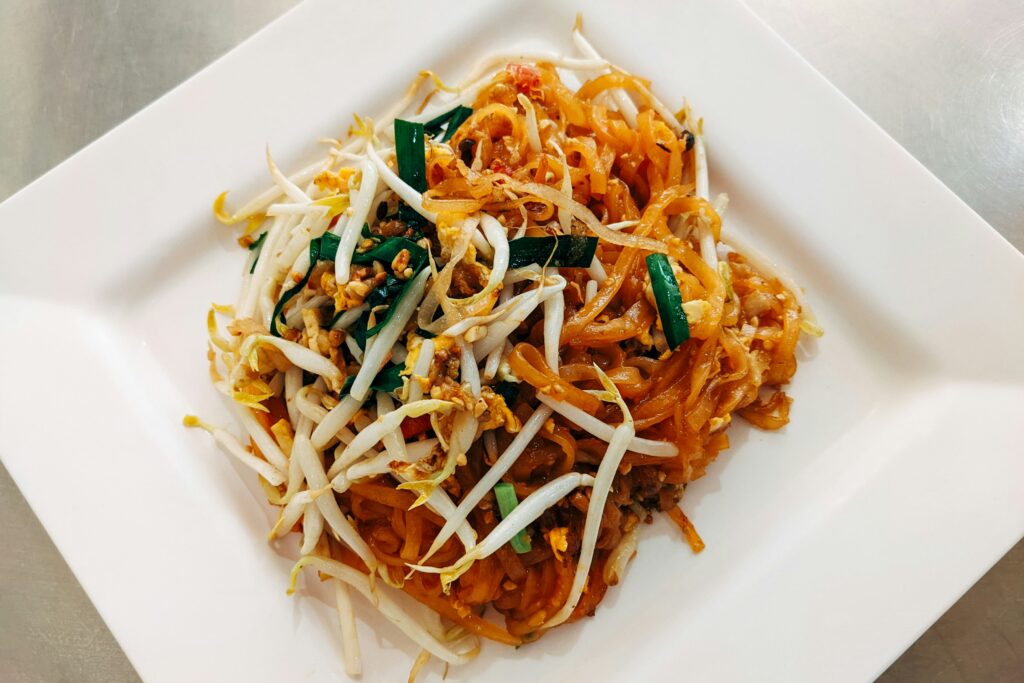
Move or push everything to one side of the wok. Crack the eggs into the empty space and scramble them immediately with a spatula, breaking up the yolks. Allow to stand for only 10-15 seconds before folding through the noodles when still soft. Which is what makes Pad Thai have those lovely laces of egg throughout every bite.
Step 8: Add the Vegetables
Add the bean sprouts and the spring onions, then toss everything for another minute on high heat. What you want is, the bean sprouts to still be crunchy. So do not over cook them. Turn off the heat.
Step 9: Plate and Garnish
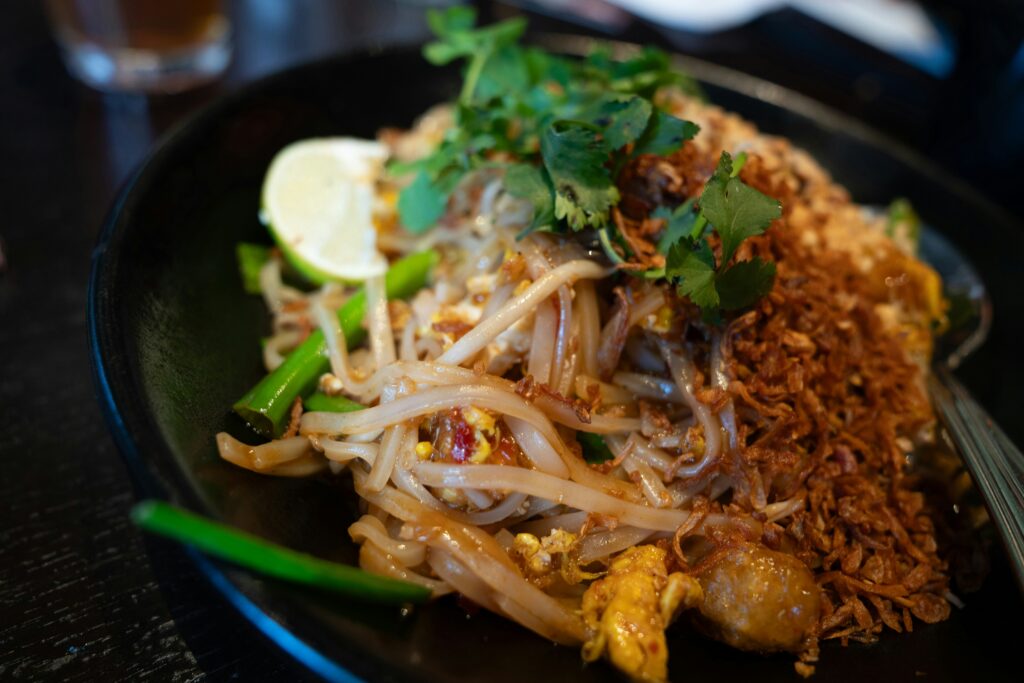
Divide into bowls immediately. Garnish with crushed & toasted peanuts, fresh coriander and serve with a wedge of lime on the side. Serve with little bowls of dried chili flakes, extra fish sauce and sugar, in homage to the traditional Thai way of allowing everyone to tailor their own flavor at the table.


Nutritional Information
Per serving (approximate – based on 4 servings)
| Nutrient | Amount |
|---|---|
| Calories | 540 kcal |
| Carbohydrates | 68 g |
| Protein | 32 g |
| Fat | 16 g |
| Saturated Fat | 3 g |
| Fiber | 4 g |
| Sugar | 12 g |
| Sodium | 920 mg |
| Vitamin A | 480 IU |
| Vitamin C | 18 mg |
| Iron | 3 mg |
| Calcium | 90 mg |


Health Benefits of Pad Thai
- High in protein – Chicken and eggs – Contains 32g protein per serving, perfect for muscle recovery and satiety.
- Gluten-free naturally – Rice noodles are one of the most easy to eat Asian cuisines for those who cannot tolerate gluten.
- Rich in Vitamin C – Bean sprouts and lime are powerful sources of vitamin C that promotes immune support, collagen production, and more.
- Low in saturated fat – Pad Thai, especially when using chicken or prawns, is a lean dish compared to many stir fried meals.
- Antioxidant-rich – Garlic, shallots and coriander all contain significant antioxidants that are beneficial for health.
Tips for the Best Pad Thai
High Heat is Everything
Pad Thai should be cooked on the highest heat your stove can produce. A good carbon steel wok makes all the difference, this one or this one are both excellent options. This gives you the signature wok hei, a smoky, slightly charred quality which is impossible to replicate with lower heat. If your noodles are steaming and not sizzling, your heat is too low.
Soak Noodles in Cold Water, Not Boiling
This step is the part where most people screw up. Flat Rice noodles soaked in cold water for 30 minutes are soft enough to stir-fry without becoming mushy. Just boiling them or soaking them in hot water completely mushes the noodles before they even get to the wok. Cold water only.
Cook in Batches if Needed
If you are cooking for more than 2-3 people, cook the Pad Thai in two separate batches rather than doubling the recipe in one wok. Overcrowding the wok drops the temperature dramatically and turns your stir-fry into a steam. The noodles go soft and the sauce never caramelizes properly. Two quick batches always beats one crowded batch.
Taste and Adjust the Sauce Before Cooking
Each brand of tamarind and fish sauce varies slightly in strength. We taste our Pad Thai sauce before putting it into the wok and tweak. More tamarind for tang, more fish sauce if it needs saltiness, more sugar to make it sweet. Get it right in the bowl first.
Tamarind Paste is Non-Negotiable
Tamarind Paste is the ingredient that gives the Pad Thai its distinctive tangy depth. The flavor that no other ingredient can replicate. Do not substitute with lemon juice or vinegar. Find tamarind paste at any Asian grocery store or grab it online. It is worth the trip.

Variations to Try
Prawn Pad Thai
Substitute the chicken for large raw prawns. This is arguably the most authentic Pad Thai in Thailand. Prawns will take less than 2 minutes to cook in the hot wok, so add it before the noodles. It is amazing how well the sweetness of fresh prawns goes with this tamarind sauce.

Vegetarian Pad Thai
Substitute the chicken for firm tofu, cubed and pan-fried separately until golden/crispy. Use soy sauce or tamari instead of fish sauce. Skip the dried shrimp. The end product is every bit as satisfying as the original.
Pad Thai with Extra Wok Hei
For an authentic smoky taste, let the noodles sit undisturbed in the wok for 30-45 seconds at a time rather than tossing constantly. This creates little charred spots on the noodles just like the street-food smokiness that Bangkok is famous for.

Pad See Ew
For Pad Thai lovers, give its close cousin a try: Pad See Ew. Same wok action but with wider flat noodles, Chinese broccoli plus dark soy sauce and a much deeper more caramelized flavor profile. A logical next step after you have mastered Pad Thai.
Frequently Asked Questions
What is the difference between Pad Thai and Pad See Ew?
They are both noodles prepared in a Thai-style stir-fry, but have completely different flavor profiles. Pad Thai employs rice vermicelli or thin flat noodles and a tangy, balanced, tamarind-based sauce. Pad See Ew is made with wide flat rice noodles and dark soy sauce that impart a more intense, depth of flavor that is beautifully caramelized and slightly sweet. Pad Thai is more on the tangy and light side while Pad See Ew is richer and savorier.
Can I use regular spaghetti instead of rice noodles?
For the authentic experience, flat rice noodles are essential. Their texture and flavor are entirely unlike wheat pasta. However if rice noodles are genuinely unavailable, thin wheat noodles are a reasonable emergency substitute. The dish will taste different but still delicious.

Where do I find tamarind paste?
Tamarind paste will be available at any Asian grocery store. It is also becoming more readily available in the international section of larger grocery stores. Or just buy it online, which is obviously a safer alternative. Do not skip it. It is the main part of Pad Thai sauce.
Can I make Pad Thai ahead of time?
Pad thai is best eaten fresh, straight from the wok. The noodles absorb the sauce as they sit and can become sticky and dry on reheating. You can prep all your ingredients and make the sauce ahead of time, then stir-fry when ready to eat. It takes less than 15 minutes once everything is prepped.
Why are my noodles sticking together?
Either the noodles were over-soaked and too soft before hitting the wok, or the heat was not high enough. Make sure you soak in cold water only, drain well before cooking, and keep the heat on maximum throughout.
Is Pad Thai gluten-free?
Traditional Pad Thai made with rice noodles and fish sauce is naturally gluten-free. However, some brands of oyster sauce contain wheat. So check the label or substitute with a gluten-free oyster sauce. Soy sauce also typically contains wheat, so use tamari as a substitute if you are strictly gluten-free.