
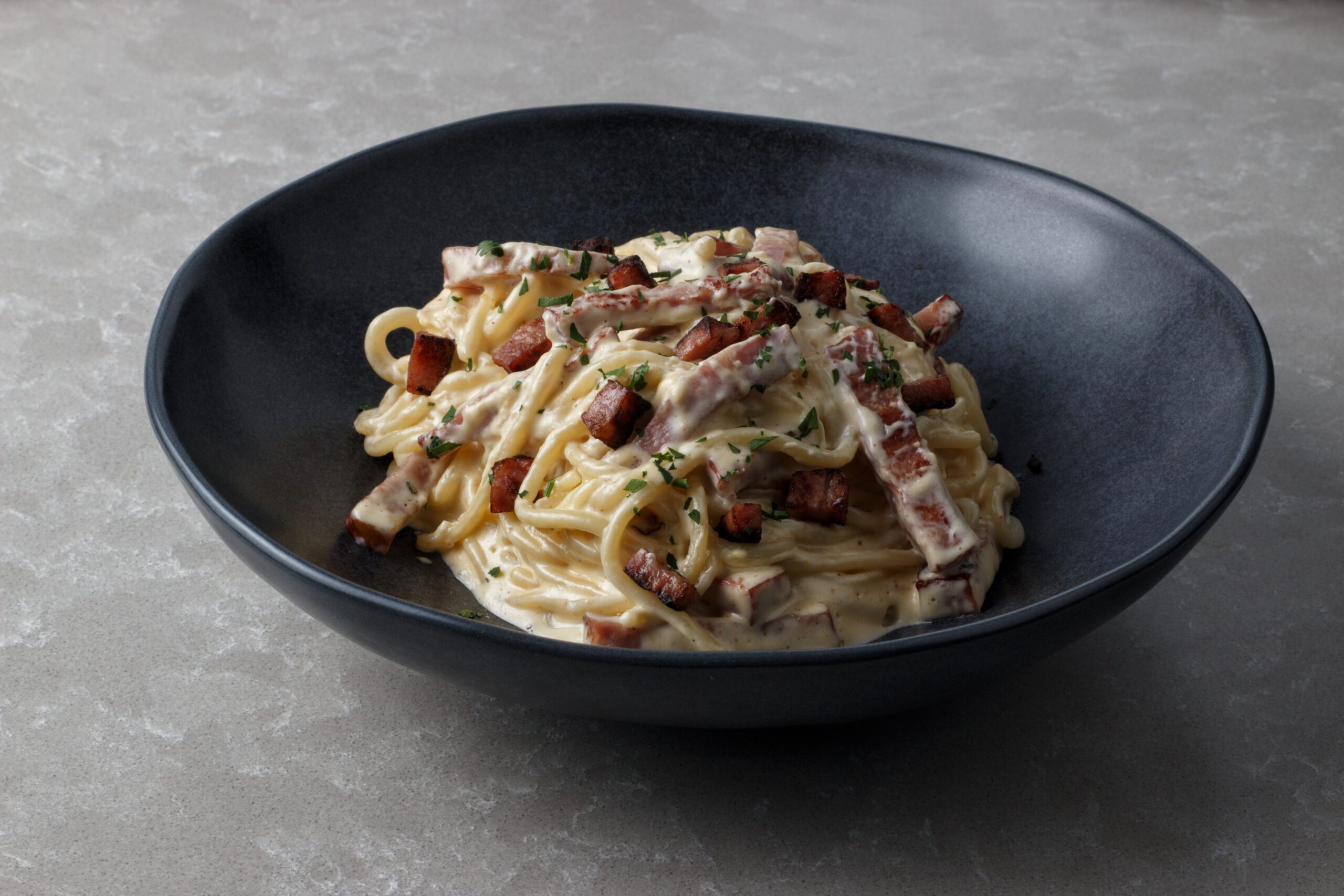
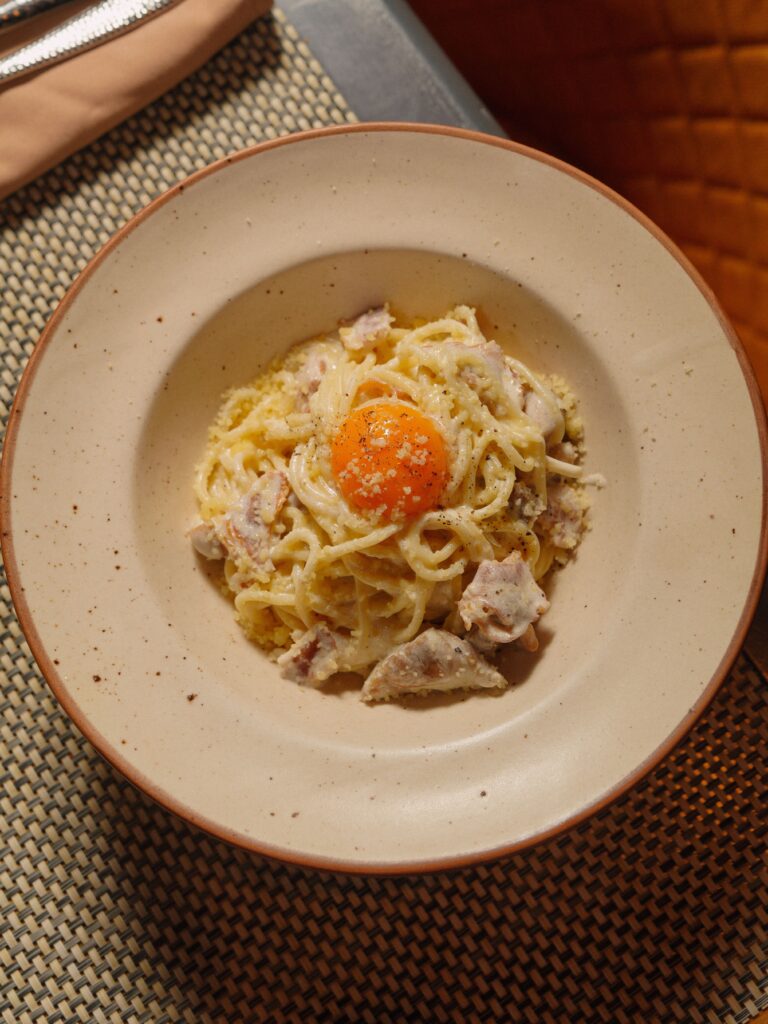
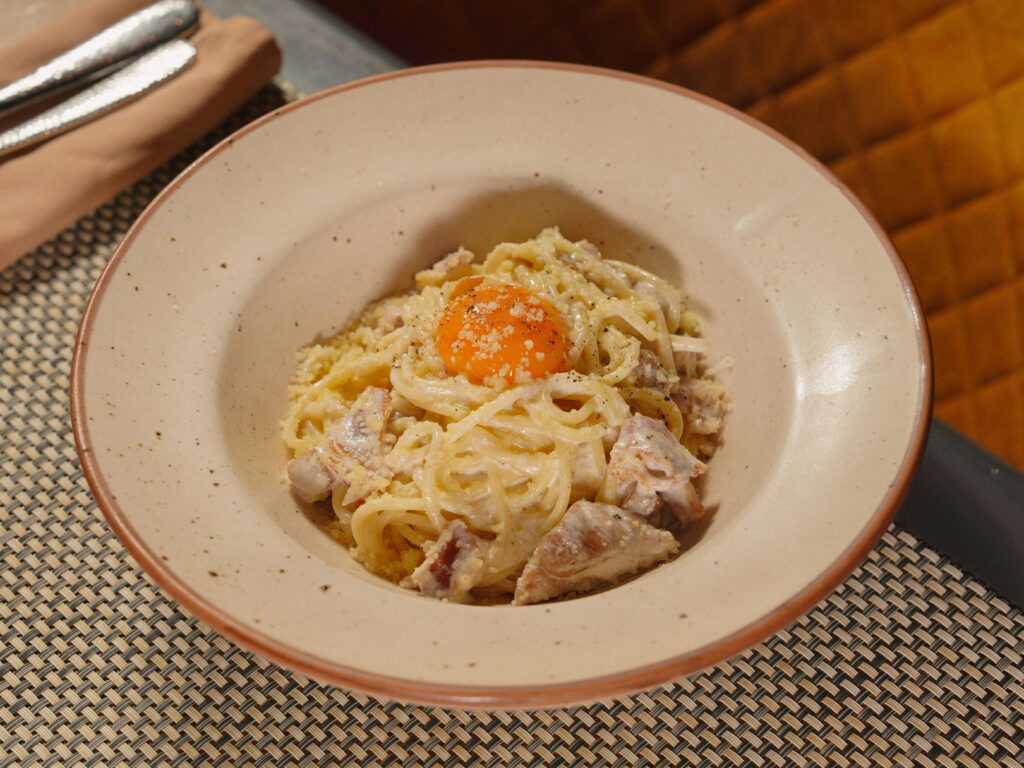
Spaghetti Carbonara alone has sparred more arguments on the internet than any other pasta dishes and honestly? And each of those arguments is totally worthwhile. Because when Carbonara is made right — truly, authentically right — it is one of the most extraordinary plates of food on this planet. SILKY, RICH, DEEPLY SAVORY, AND 100% SIMPLE. This is Roman cooking at its absolute finest.
Carbonara was born in Rome, in the Lazio region of Italy, and Romans are fiercely, passionately protective of it. Ask any Roman grandmother about adding cream to Carbonara and prepare for a lecture. Because the secret to an authentic Carbonara is that there cannot be any cream involved. Not a single drop. The creation of the fully egg based sauce is what results in that luxuriously silky and velvety texture that you cannot tell it is cream-free (it’s not). Pecorino Romano cheese and a generous helping of the starchy pasta water, that’s the secret.
The other must-have is guanciale, which is salt-cured pork cheek. Not bacon. Not pancetta. Guanciale. It has a richness and depth of flavor that neither bacon nor pancetta can compete with. It is the soul of the dish.
This is the never-ending fascination of Carbonara: on the page, it looks so basic with just five ingredients, twenty minutes, but look at how many (even professional) cooks have fallen flat. The technique matters enormously. Get this right, and you have magic, Roman magic. Get it wrong and you have pasta with scrambled eggs. This recipe will make sure you get it absolutely right.
What is Spaghetti Carbonara?
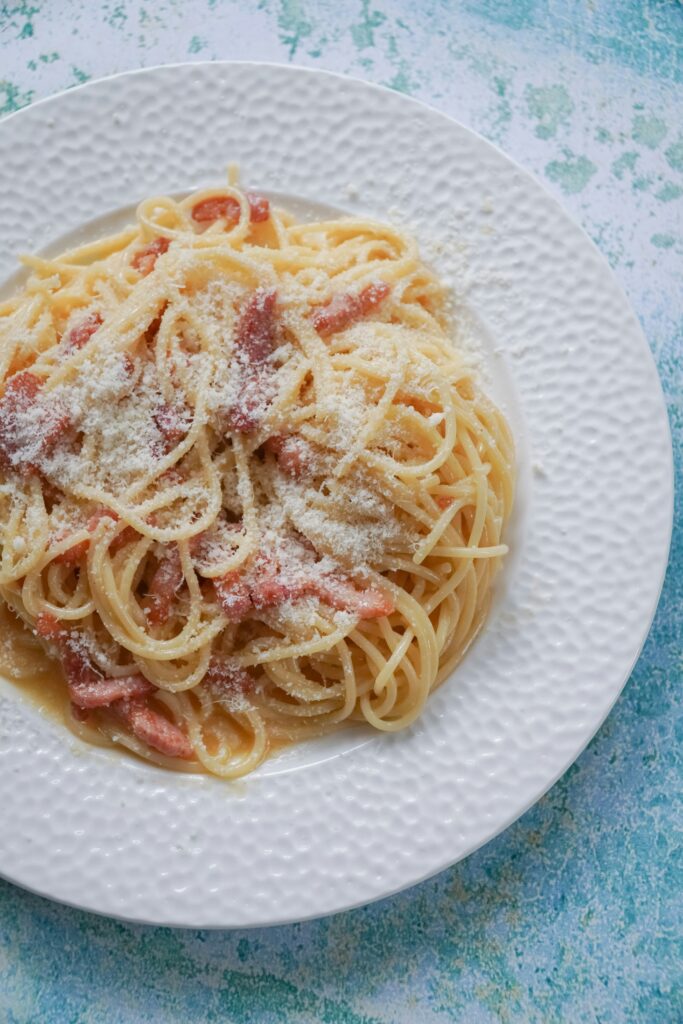
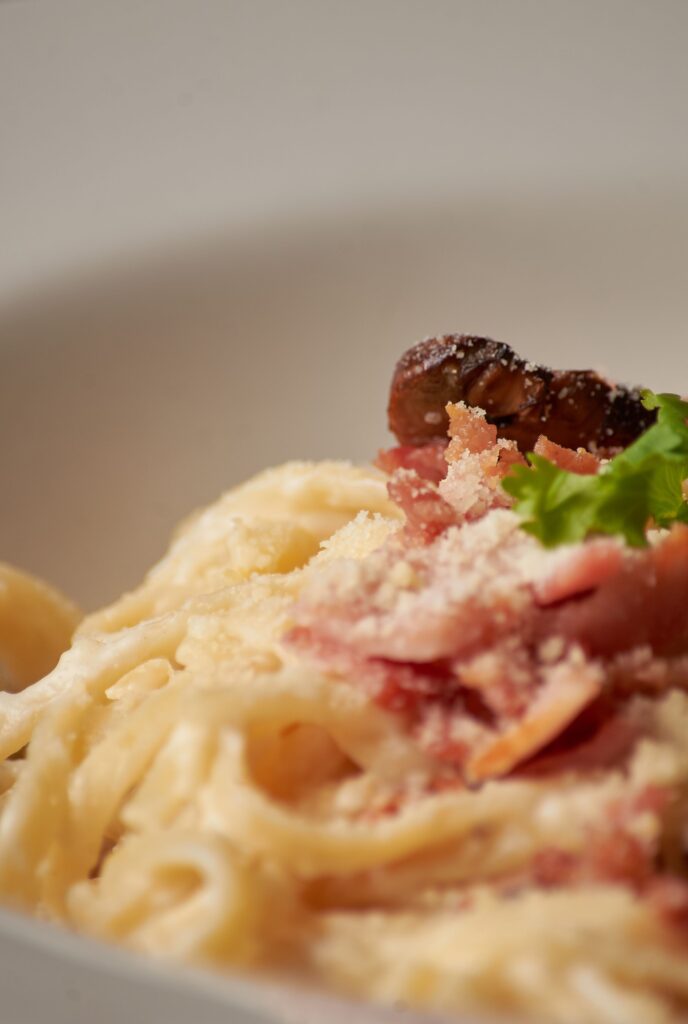
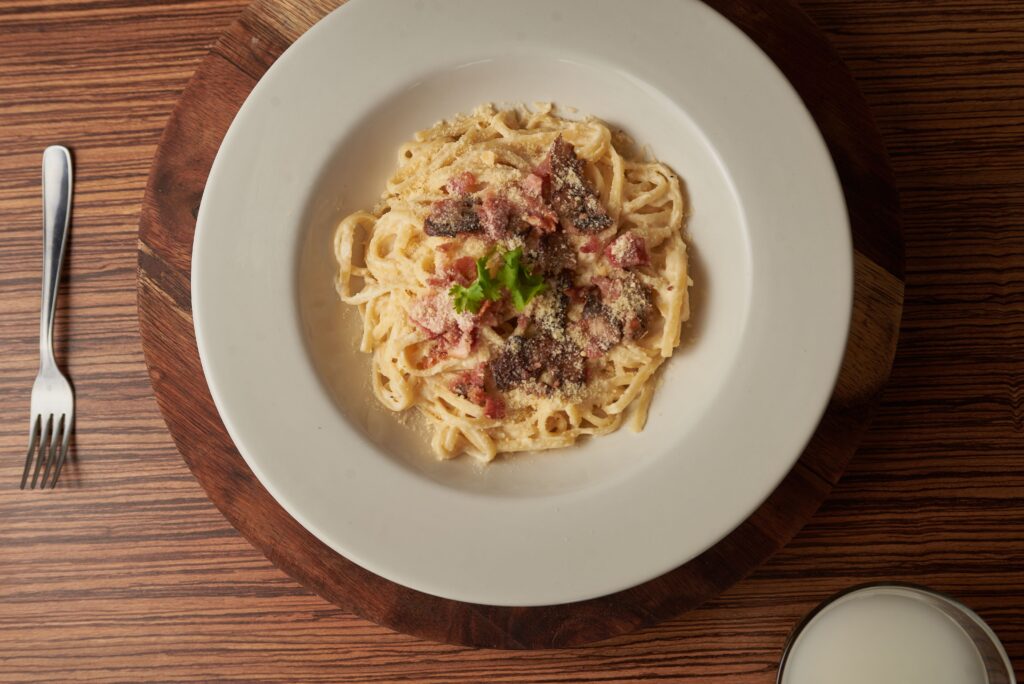
Spaghetti Carbonara is a classic Roman pasta dish made with spaghetti, guanciale, eggs, Pecorino Romano cheese and black pepper. No cream. No onion. No garlic. Just those five ingredients working in perfect harmony.
According to some, the name Carbonara derives from carbone (the Italian word for coal) possibly as a reference to the copious quantities of coarsely ground black pepper which coats the finished product like specks of coal dust. It is a dish that originated in Rome in the mid-20th century, and has become one of Italy’s most famous and well-known pasta dishes around the world.
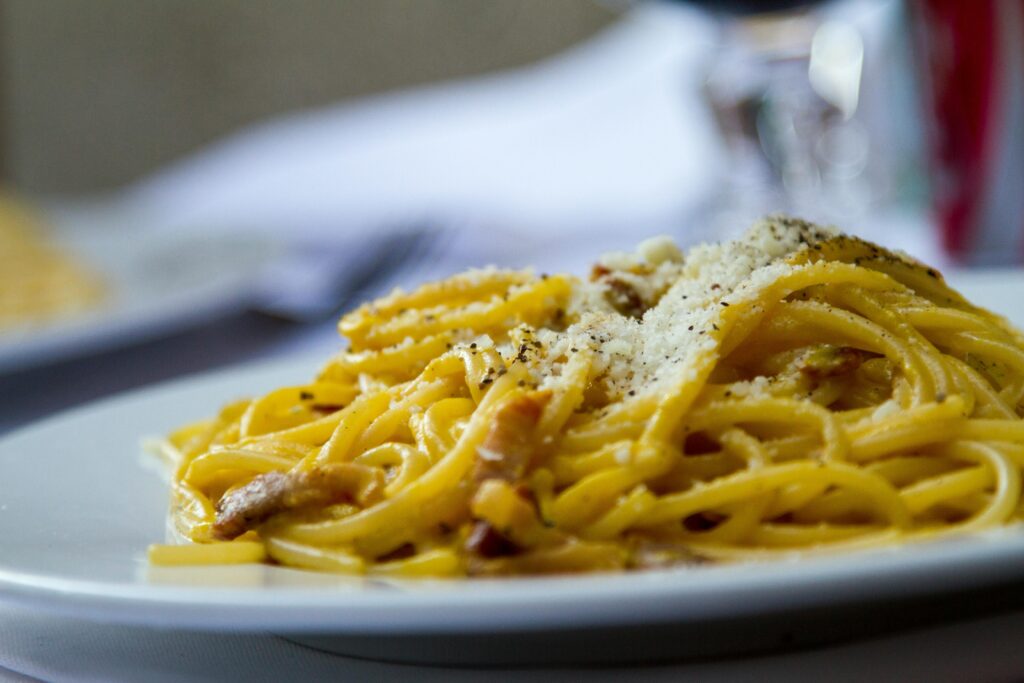
What sets Carbonara apart from every other pasta dish is the technique of the sauce. The egg and cheese mixture is tempered off the heat using only the residual warmth of the pasta and the reserved starchy cooking water. This creates a sauce that coats every strand of spaghetti in a glossy, creamy emulsion — with absolutely no cream required.
Ingredients
Serves 4 people
For the Pasta
- Spaghetti – 400g
- Guanciale (salt-cured pork cheek) – 200g – cut into small cubes or strips
- Pasta cooking water – 1 cup reserved (this is crucial, do not forget)
For the Carbonara Sauce
- Eggs – 4 large (2 whole eggs + 2 egg yolks)
- Pecorino Romano – 80g – finely grated (plus extra for serving)
- Parmesan – 40g – finely grated (optional but adds depth)
- Coarsely cracked black pepper – 2 teaspoons (freshly cracked, not pre-ground)
- Salt – for pasta water only
For Serving
- Extra Pecorino Romano – grated generously over the top
- Extra cracked black pepper
- No garnish needed. This dish needs nothing else
Step by Step Instructions
Step 1: Prepare the Egg and Cheese Mixture
Whisk the 2 whole eggs and 2 egg yolks in a bowl until it is fully combined. Add the finely grated Pecorino Romano and Parmesan, and mix until you have a thick, pale yellow paste. Add cracked black pepper generously as seasoning. Set this aside at room temperature, it needs to be at room temperature when it hits the pasta, not cold from the fridge.
Step 2: Cook the Guanciale
Put the guanciale in a cold pan, no oil, the fat from the guanciale will render beautifully as it heats. Increase the heat to medium and cook for 8 to 10 minutes, stirring occasionally, until the guanciale is golden with crispy edges and has released all of its beautiful fat into the pan. Turn off the heat. Keep the guanciale and its fat in the pan as both will go into your pasta.
Step 3: Cook the Spaghetti
Bring a large pot of water to a rolling boil. Add a generous amount of salt and it should taste like the sea. Add the spaghetti and cook until just under al dente, about 1 to 2 minutes less than the packet instructions. You want it with a little more bite than usual because it will continue cooking when tossed with the sauce. Before draining, scoop out at least 1 full cup of the starchy pasta water. This is liquid gold and the key to your sauce.
Step 4: Combine the Pasta and Guanciale
Toss the drained spaghetti directly into the pan with guanciale and its fat. Add everything and mix on very low heat for 1 to 2 minutes, enough to let the pasta absorb the pork fat. At this point, remove the pan completely off the heat. This next phase doesn’t even need heat.
Step 5: Create the Carbonara Sauce
And this is the moment that separates a great Carbonara from a ruined Carbonara. Combine the egg and cheese into a bowl and when the pan is moved completely off of the burner add in your egg, and cheese mixture while tossing along with pasta. Immediately pour in a splash of the reserved pasta water and keep tossing. The starchy water along with the residual heat of the pasta will slowly but surely cook those eggs into a silky cream sauce. Continue adding pasta water a little at a time, tossing until perfectly coating every strand of the pasta. You want it glossy, flowing and not wet, not scrambled.
If the sauce appear too thick, add more pasta water. It will come together, if it looks too thin, keep tossing.
Step 6: Serve Immediately
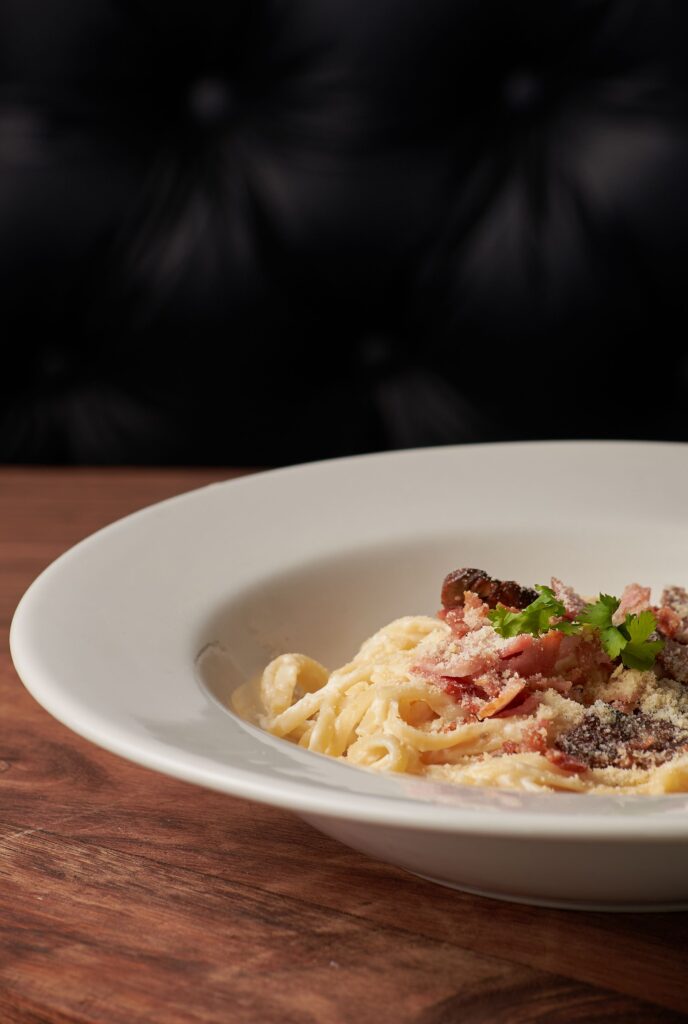
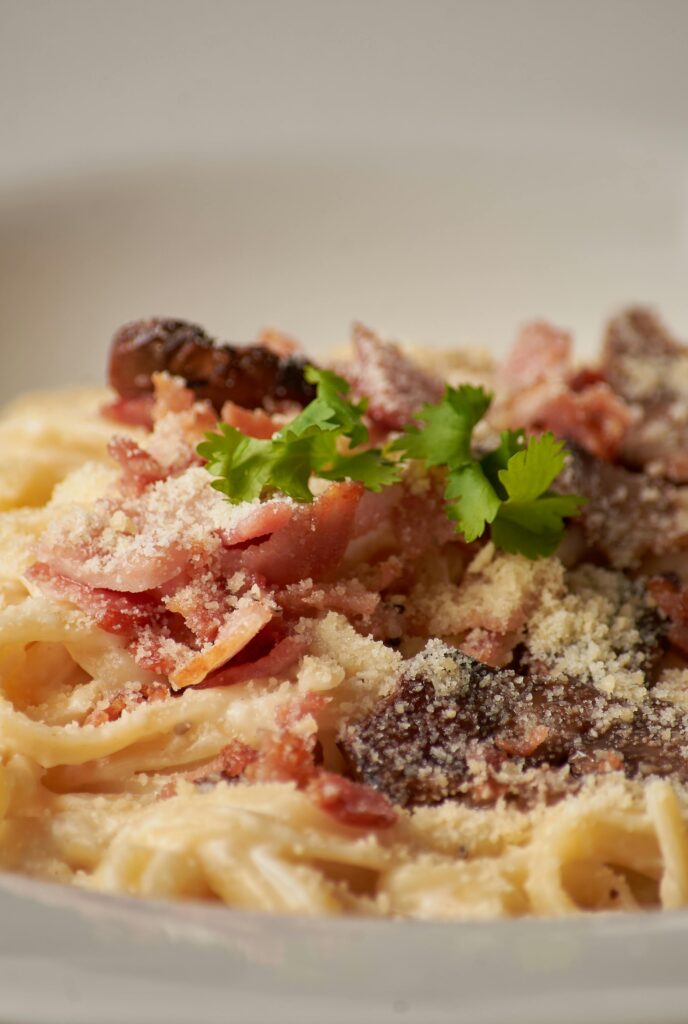
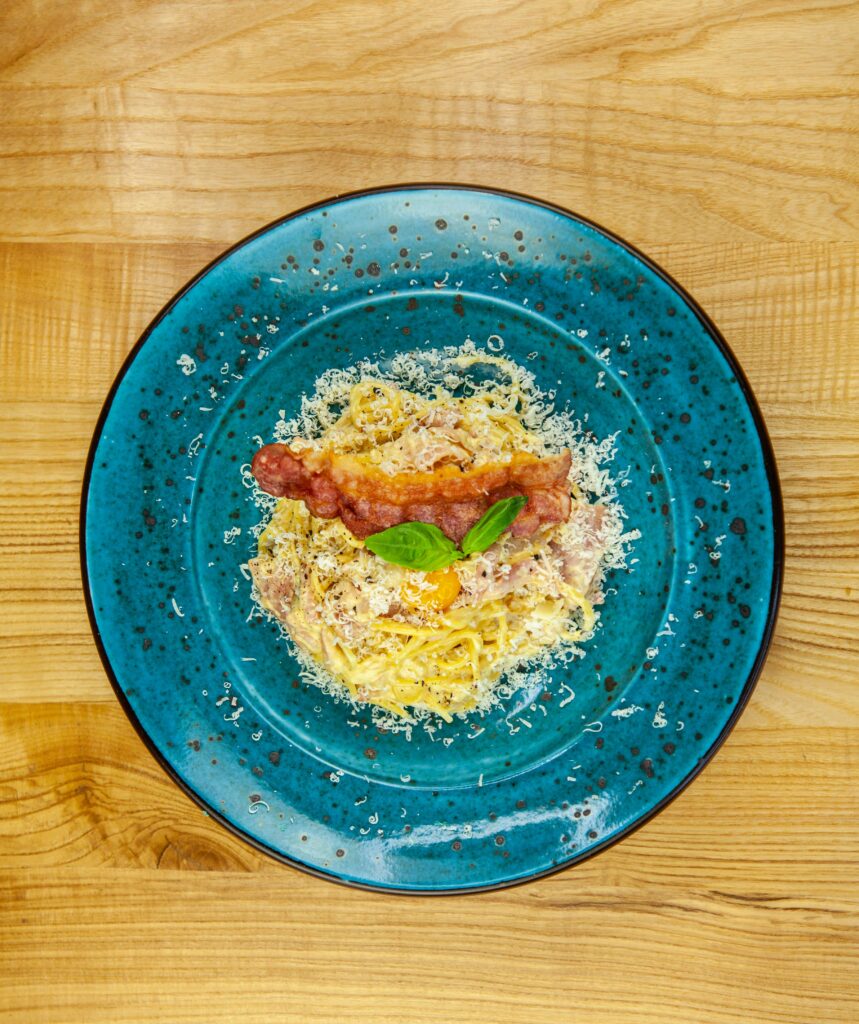
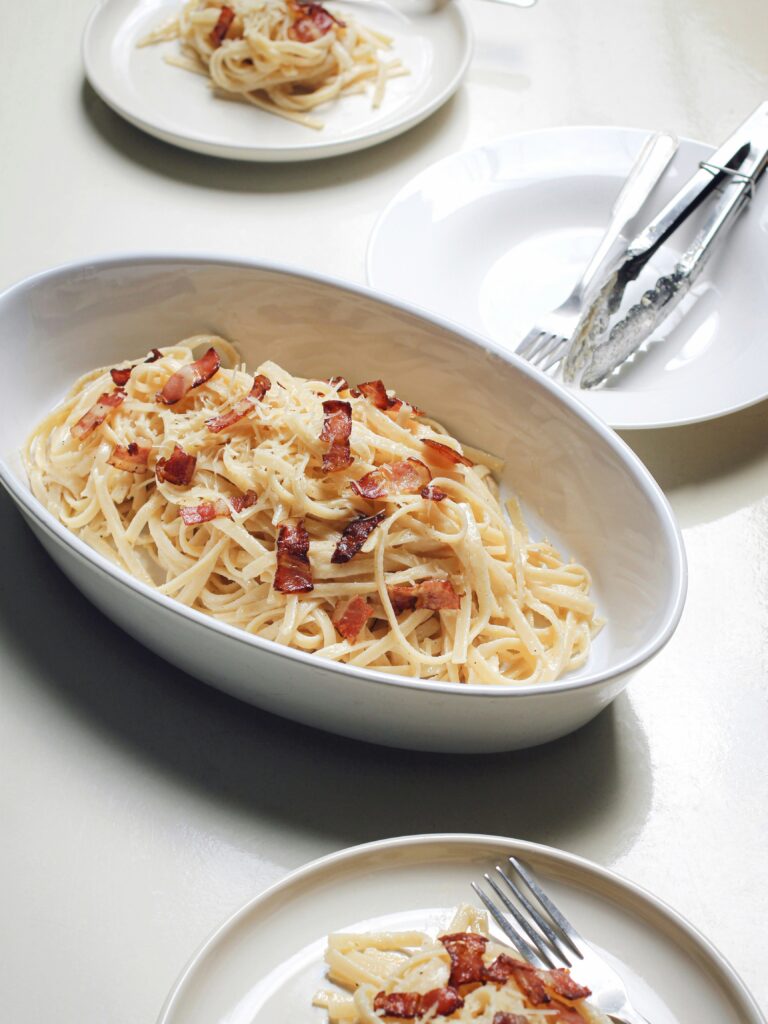
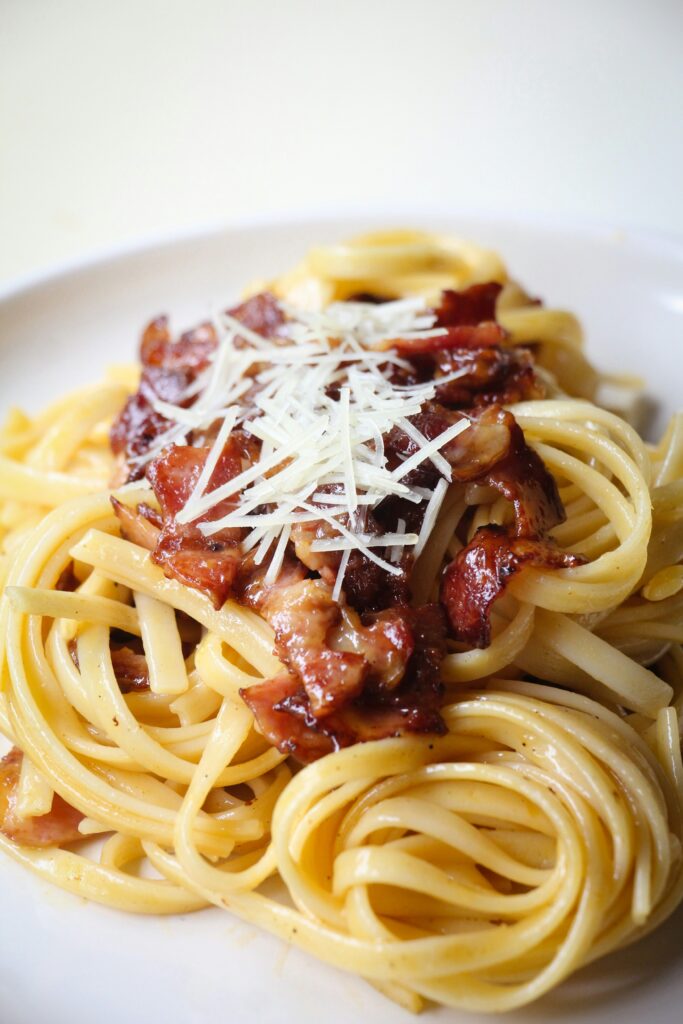
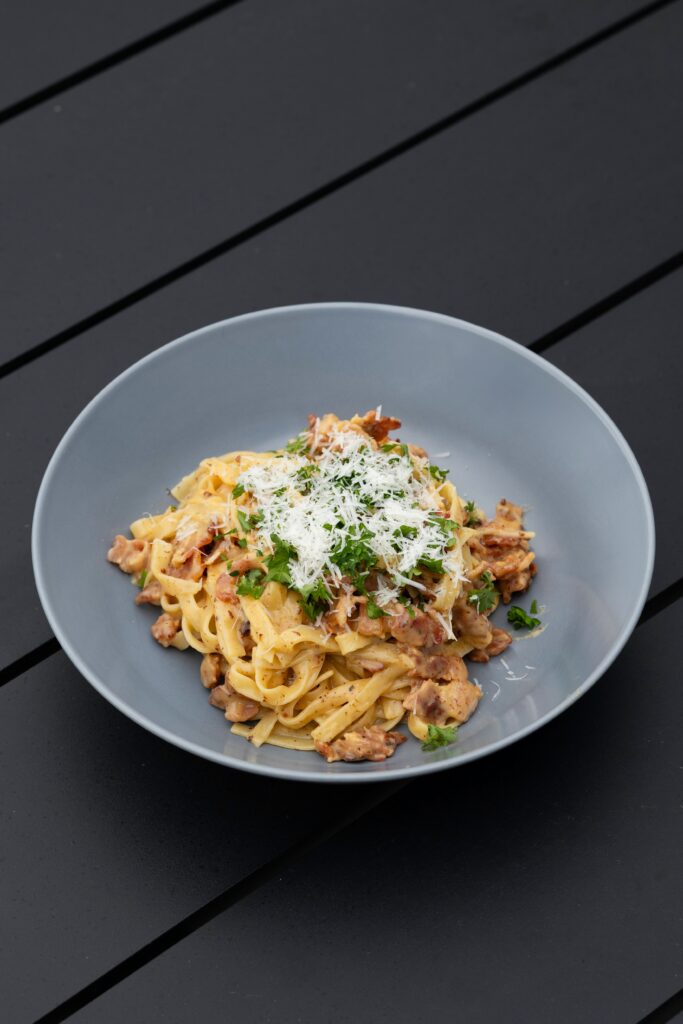
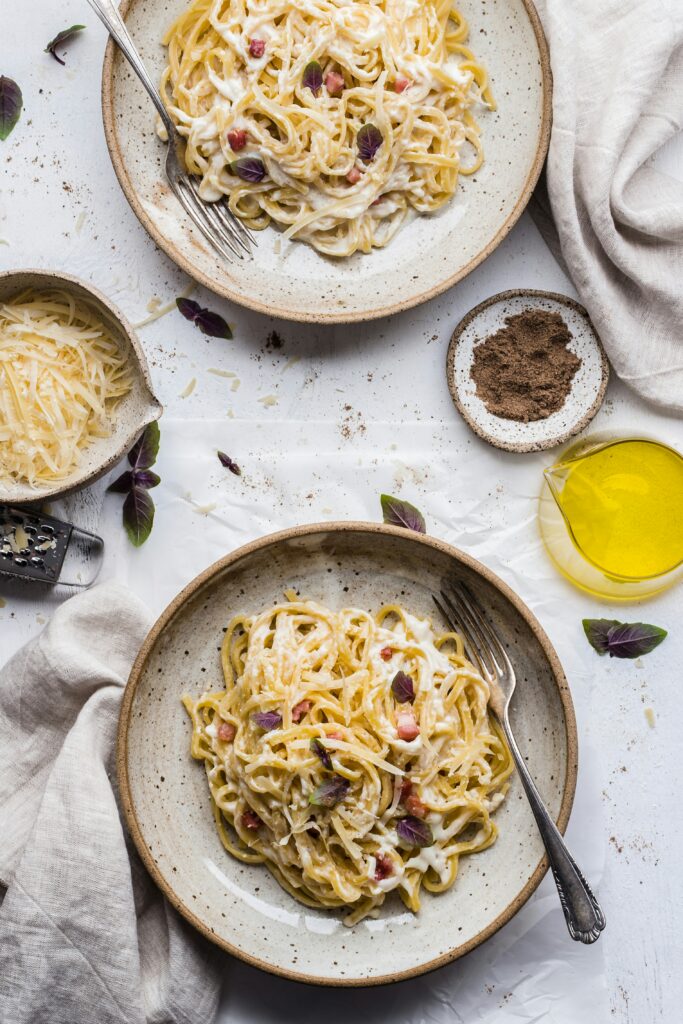
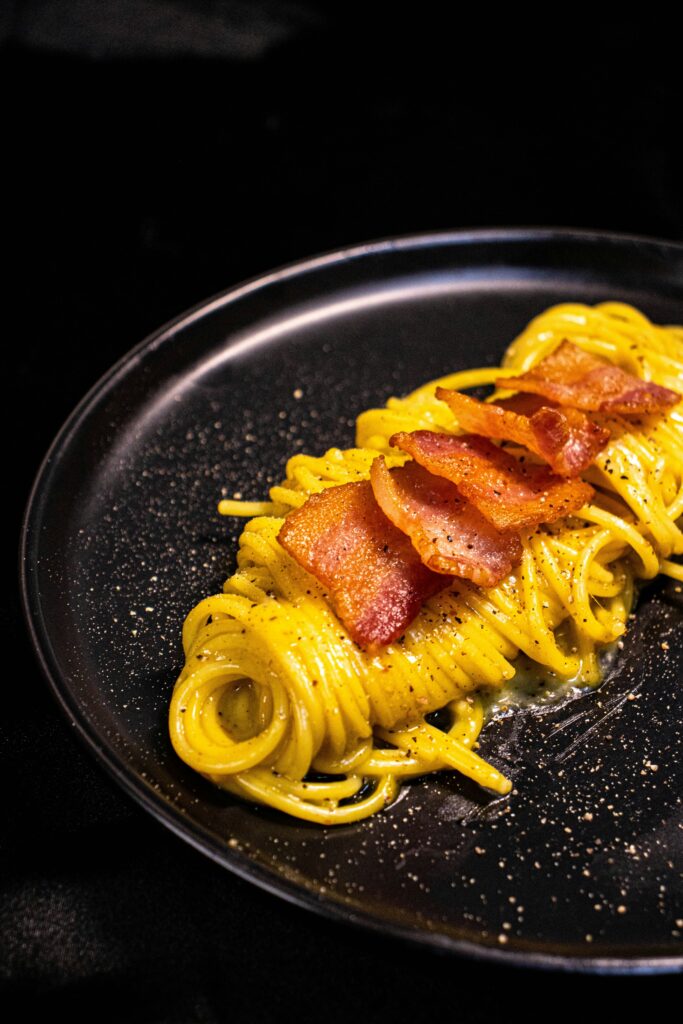
Carbonara waits for no one. Divide into warm bowls immediately. Top with a good snowfall of freshly grated Pecorino Romano and a big crack of black pepper. Serves immediately at its silkiest. You do not plate this dish and leave it on the counter. Eat as soon as it is ready.
Nutritional Information
Per serving (approximate – based on 4 servings)
| Nutrient | Amount |
|---|---|
| Calories | 620 kcal |
| Carbohydrates | 72 g |
| Protein | 28 g |
| Fat | 26 g |
| Saturated Fat | 10 g |
| Fiber | 3 g |
| Sugar | 2 g |
| Sodium | 890 mg |
| Vitamin A | 320 IU |
| Vitamin C | 0 mg |
| Iron | 3 mg |
| Calcium | 280 mg |
Health Benefits of Spaghetti Carbonara
- High in protein – Eggs and guanciale combined provide approximately 28g protein per serving, helping keep you full and satisfied for hours.
- Rich in calcium – Pecorino Romano is one of the highest calcium cheeses available, great for bones!
- Vitamin B – Eggs are natural sources of vitamins B12, B6 and riboflavin, which help the body release energy from food.
- Healthy fats – Fat from eggs yolks and pig fats supply oleic acid, the identical heart-healthy fat found in olive oil.
- Iron and Zinc – Guanciale, together with eggs includes significant amounts of iron and zinc which are both key for immune system function.
Tips for the Best Spaghetti Carbonara
Never Add Cream. Never.
This is rule #1 of making Carbonara. Cream is nowhere to be found in authentic Roman Carbonara. All the creaminess comes from emulsification between eggs, cheese and starchy pasta water. Cream weighs it down, covers up the flavor of the guanciale and cheese, and changes it into a dish with a different identity all together. Trust the technique.
The Pan Must Be Off the Heat
The simple reason that Carbonara becomes scrambled eggs is adding the egg mixture to a hot pan. Before adding in your egg and cheese mixture, turn the heat all the way off. All you need is the residual heat of the pasta. Patience here is everything.
Pasta Water is the Real Secret
That cloudy, starchy pasta water is no afterthought. It literally connects the sauce. Starch promotes emulsification and helps yolk and cheese blend into a smooth, shiny sauce (and lets you control the consistency perfectly). Reserve at least a whole cup before you drain. Always.
Use Whole Eggs and Extra Yolks
The sauce is a little looser using just whole eggs. Using only yolks makes it richer but heavier. Two whole eggs and two extra yolks strikes the right ratio – silky, luxurious, oozy rather than being stodgy. This ratio is tested and trusted.
Guanciale is Worth Finding
If you can get your hands on guanciale, use it. It is available at Italian delis and specialty food stores. The fat content is higher than pancetta and the flavour is nuttier, more complex and deeper. If you genuinely cannot find it, pancetta is an acceptable substitute. Bacon is a last resort — the smokiness changes the character of the dish quite significantly.
Variations to Try
Rigatoni Carbonara
Romans actually debate whether spaghetti or rigatoni is the superior Carbonara vessel. Rigatoni’s ridged tubes keep the sauce in each piece and therefore, every bite gives you a combustion of little pockets of pure flavor. Give this a shot at least once, you may never go back.
Carbonara with Pancetta
Pancetta is the most authentic alternative to guanciale but should be avoided if possible. It has a bit of a milder, less-greasy flavour but still exceedingly meaty and tasty. Cut it up small and fry it slowly just like the guanciale.
Truffle Carbonara
A luxurious Roman restaurant variation. Add a few shavings of fresh black truffle or a teaspoon of good quality truffle oil to the finished pasta right before serving. The earthiness of the truffle against the richness of the egg sauce is extraordinary. Save this one for a special occasion.
Vegetarian Carbonara
Replace the guanciale with crispy pan-fried mushrooms, oyster or king oyster mushrooms work best. Cook them in butter until deeply golden and slightly crispy. The umami depth of well-cooked mushrooms bridges the gap admirably. Not traditional, but genuinely delicious.
Frequently Asked Questions
Why does my Carbonara turn into scrambled eggs?
The primary cause is adding the egg mix while within the heat. Remember to remove the pan completely off the heat before adding the eggs, work fast while tossing. The heat of the pasta further cooks the eggs by residual gentleness, turning them into a sauce.
Can I use Parmesan instead of Pecorino Romano?
Pecorino Romano is the traditional choice and gives a sharp, salty taste to Carbonara. While Parmesan has a milder flavor and lesser saltiness. Or you can do a 50/50 blend, which is how most Romans do it at home in fact, or Parmesan alone if that’s all you have. Pecorino is way saltier, so just taste first before adding any extra salt.
Can I make Carbonara ahead of time?
Carbonara is one of those dishes that must be made fresh and eaten immediately. It does not reheat well at all, the egg sauce breaks on reheating and loses its glossy texture. Make it, serve it, eat it. Carbonara is a live performance, not a rehearsal.
What pasta shape works best for Carbonara?
Spaghetti would be your most traditional, classic option. Rigatoni comes in a very respectable Roman second. Linguine works well too. As a rule of thumb, avoid short pasta shapes like penne or farfalle. The sauce needs long strands or tube shapes to cling to properly.
How do I know if the sauce consistency is right?
The sauce should coat every strand of pasta like a glossy, flowing veil. It should not be wet and pooling at the bottom of the bowl, and it should not be clumped and sticky. If it is too thick, add pasta water a tablespoon at a time and toss. If it is too thin, keep tossing off heat, it will thicken as it cools slightly.
Is Carbonara safe to eat with raw eggs?
The eggs are gently cooked by the heat of the pasta and the starchy water, they are not raw in the finished dish. However, if you are concerned, use pasteurized eggs. If cooking for pregnant women, young children or the elderly, pasteurized eggs are the safer choice.